Showing posts with label crawl space. Show all posts

Wednesday, October 8, 2014

The #1 Enemy of your Crawl Space is ...

How can I have mold in my crawl space? I know I don't have a water problem down there. 

This is a common response from homeowners when told that they have a mold problem. Visible standing water is one obvious sign of wet crawl space. But the most common enemy of the crawl space is less visible and less obvious: High Humidity. 
High humidity causes significant problems in your crawl space.
90% (pictured here) is extremely high.

If you live in the South and you have a crawl space, you need to be aware of the humidity situation in your crawl space. Humid outdoor air, poor air circulation, and the presence of other water sources often create an environment in which the humidity in the crawl space is higher than the humidity outdoors!

Our rule of thumb is that you want your humidity level to be below 60%. High humidity levels can cause the following:

  • Elevated Wood Moisture Levels: levels above 16% can lead to mold growth, wood rot, and structural damage.
  • Mold Growth: Mold thrives in humid environments.
  • Insulation Failure: Insulation absorbs moisture like a sponge. Wet insulation decreases in R value and eventually becomes so weighted down with excess water that it falls to the floor.
  • Pest Activity: Like mold, rodents and insects enjoy dark, humid environments.
    High humidity leads to high wood moisture levels.
    This wood is at 17% and has visible fungal growth.
  • Poor Indoor Air Quality: 40%-50% of the air you breathe on your first floor originates in your crawl space. 
  • Musty Smells: If you aren't sure what that smell is, there's a good chance it is coming from your crawl space. 
The good news is that humidity in your crawl space can be controlled! Visit our website to learn more about solution options or to schedule a free inspection from our experts. 


Thursday, March 6, 2014

You Choose the Title!

How NOT to install a sump pump
When installed improperly a sump pump can be a source of humidity, foul odors, and mold rather than a solution. Here are three ways that this sump pump is installed improperly.
  1. No lid. A proper sump basin has a lid which serves multiple purposes. 1) A lid prevents the basin water from evaporating back into your crawl space and eventually being absorbed by your insulation and floor joist. 2) A lid helps ensure a clean environment for the sump pump. Notice the dirtiness of the water and the inside of the green basin. 3) A lid is also a safety mechanism to prevent Barky or Meow from falling in. Sadly, while performing a routine inspection, one of our technicians found a customer's puppy that had been missing for months. 
  2. Five-gallon bucket, rather than a proper sump pump basin. There are several models that will get the job done, but the typical basin is about twice the depth and four times the volume of this five-gallon bucket. 
  3. No holes to allow ground water to enter basin. In a crawl space environment it is most effective to drill holes around the basin to allow ground water to enter the basin and then be pumped out. The only water entering this basin is being pumped through tubes (black 1" tube above) from a dehumidifier. Notice the ground surrounding this sump basin is wet and muddy because the ground water has no way of entering the basin. 
Visit our website to learn more about sump pumps, crawl space waterproofing, and basement waterproofing. Or contact us to schedule a free inspection of your home. 

Thursday, January 23, 2014

What is that smell?

I used to think that houses smelled musty because they were old, or because they had old things in them. Now I know that smell is often a symptom of something worse. The most common cause of a musty smelling house is the crawl space. Due to the stack effect, approximately 40% of the air you breath in your home originates in your crawl space. If your crawl space is moldy then the air in your home will be moldy. So I was partially right when I used to think that houses smelled musty because they were old.

The truth is that many homes in North Carolina built prior to 2004 are not properly waterproofed. Therefore many of them have a moisture issue in the crawl space which can lead to a mold issue in the crawl space. And when you have a mold issue in the crawl space you often have a musty smell in the home. 

So if the air in your home seems stale or smells musty, take a peek in your crawl space. Better yet, contact Green Frog Waterproofing for a free inspection. It could literally lead to a breath of fresh air.

Wednesday, January 8, 2014

5 Winter Tips for a Healthy Home

There are a few winter tips that (almost) everyone knows, such as opening your blinds when the sun is shining, closing your front door, and not leaving the fridge open ... but we won't mention those here. Here are some lesser known tips that might end up saving you a lot of money and headache this winter.


1. Don't leave it out in the cold. 
If your hot water heater is in your attic or garage, it is a good idea to wrap it with insulation to not lose heat.

2. Open or closed?
It is usually best to open your crawl space vents during the dry winter months to help dry out your crawl space. The one exception is when it is so cold that your pipes could freeze. But that is unlikely in the Carolinas. The geothermal heat rising from the ground under your house is usually enough to keep your crawl space above freezing, and if you have a gas furnace it will also give off enough radiant heat to keep your crawl space above 32 F. 

3. Did you know?  
Condensation (which can lead to mold) is usually thought of as a summer problem. But condensation can happen in your crawl space wherever warm and cold air mix. It can happen in the winter if your crawl space is warm and cold air is being sucked in through the vents. 

4. Who turned out the light? 
Check your crawl space regularly to ensure that bulk water is not present. Aside from causing other problems such as mold and structural damage, water can extinguish your furnace’s pilot light which can lead to carbon monoxide being leaked into your home.

5. I feel a draft!  
If you feel a draft on your first floor, there is a good chance it is coming from the crawl space. Draftiness or cold patches are often due to missing insulation or utility penetrations created in the sub floor during construction. Other than leaving your front door open, the crawl space is the easiest (and most often overlooked) way for cold air to sneak in. The best way to keep this from happening is to seal or encapsulate your crawl space. By sealing out all the outside air and insulating the walls, a sealed crawl space drastically improves the indoor air quality and energy efficiency or your home.

Thursday, January 2, 2014

6 Ways to Keep your Crawl Space Dry

1. Keep outside water out
Image
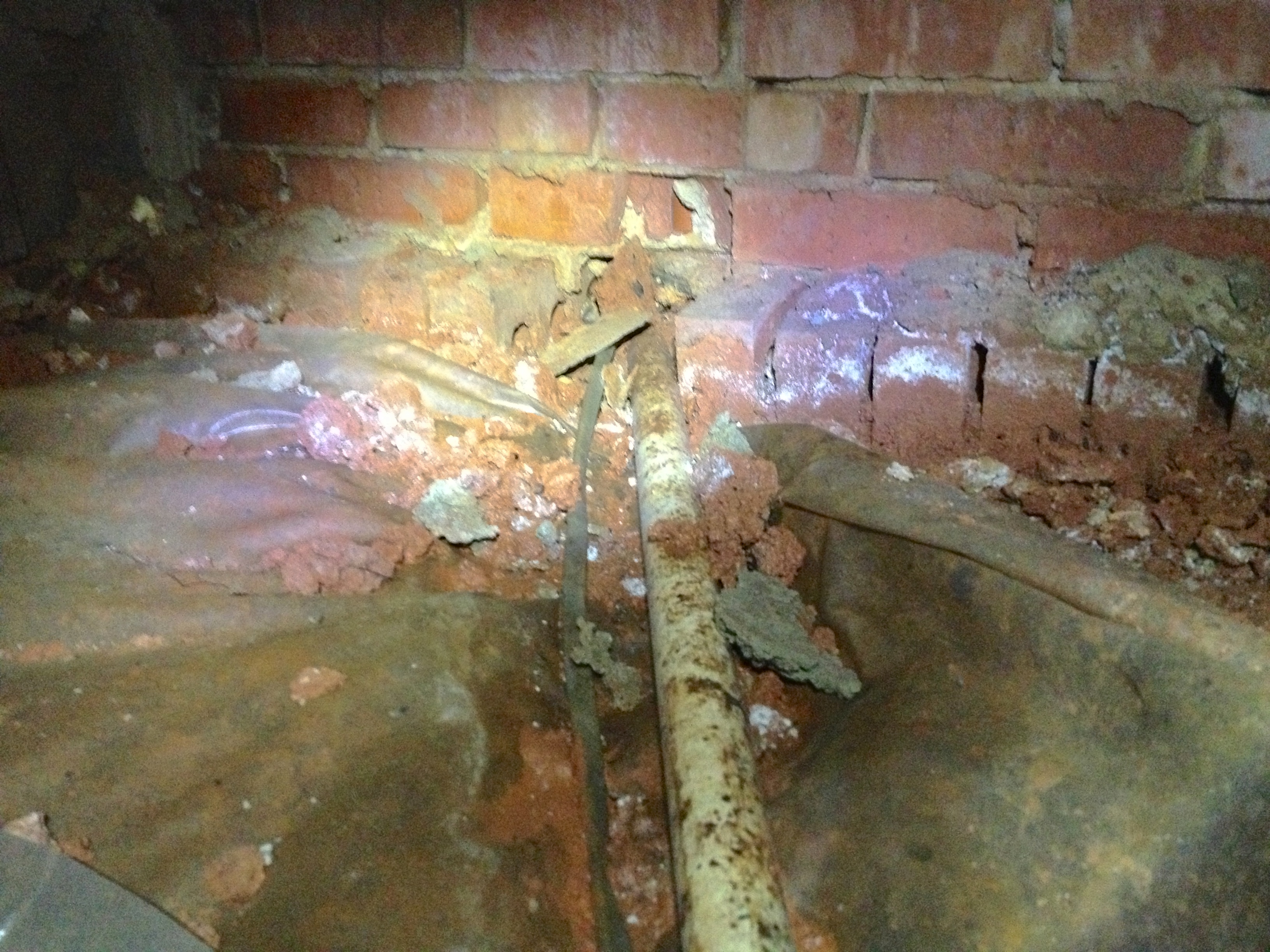
An open plumbing penetration is allowing water and debris to enter crawl space.
A few steps should be taken to prevent water from the outside of your home from having an easy opportunity to make it’s way into your crawl space. Extend your gutters (above or below ground) away from your foundation. Make sure that you have at least 5% grade falling away from your foundation so that water can easily flow away from your home. Seal below ground penetrations in your foundation wall that were created during the construction process. A thorough inspection by our Moisture Intrusion Technicians can reveal these penetrations.
2. Adequate vapor barrier
The floor of your crawl space should be 100% covered with a minimum 6 Mil plastic barrier. This barrier can be upgraded by installing a thicker plastic and/or taping the seams. A thicker plastic can add to efficiency and longevity of your vapor barrier.
3. Waterproof the outside of your home
You can prevent water from seeping through the foundation walls by waterproofing the exterior surface of your crawl space walls. This process should be performed by a professional as it involves excavating the earth beside the wall, cleaning the wall, applying a waterproof membrane, and possibly installing a drain beside the footer.
4. Install a french drain and sump pump
It is not always ideal to excavate and waterproof the exterior of the home. In this case the water can be controlled by installing an interior French drain that moves the water out of the crawl space. Depending on the terrain of your yard, a French drain may also need to be installed in conjunction with a sump pump
5. Install a dehumidifier
Image
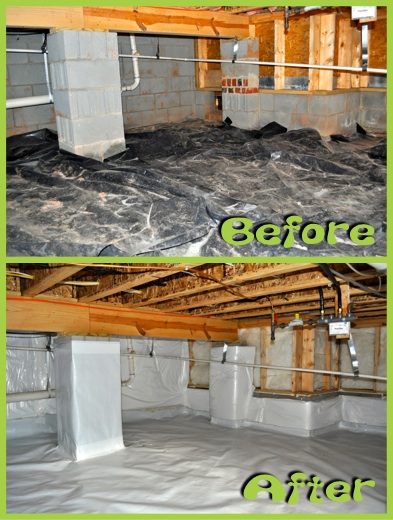
A sealed crawl space before and after.
dehumidifier can keep the humidity level low and reduce the chances of mold, but keep in mind that you will also need to seal any possible openings that can allow humid air to enter. Otherwise you will be unsuccessfully attempting to dehumidify your neighborhood! A few common culprits are the crawl vents, lack of a tight seal on the crawl door, and small holes in the masonry wall around wires, cables, and plumbing lines.
6. Seal (encapsulate) the entire crawl space
The best case scenario for maintaining an ideal humidity level in your crawl space is to seal or encapsulate the crawl space. A crawl space that is sealed properly will not allow any outside humidity to enter the crawl, creating a clean and dry environment. A sealed crawl space improves your home’s indoor air quality, improves the efficiency of your HVAC system, as well as creates an ideal environment for storage.

Tuesday, December 17, 2013

What is a French Drain and what does it have to do with France?

The phrase French Drain is heard quite often … on your favorite how-to TV show, in your local home improvement store, and in conversations in the yard with your neighbor. But I regularly hear the phrase “French Drain” used incorrectly. A French Drain is not to be confused with an underground gutter extension or a simple solid pipe used for relocating water from one location to another.

So, what is a French Drain?

French Drain install in progress
A French Drain can vary in size and materials used, but the essence of a French Drain contains these components: a trench, a perforated pipe (as opposed to a solid pipe), drainage rock, and a sediment filter. A french drain is commonly used to solve water related issues both on the interior and the exterior of a home, office, barn, shed, or other structure.

Interior applications

A French Drain is used primarily in two interior environments: basements and crawl spaces. These internal applications are methods of water control, not to be confused with waterproofing. Read this article to learn more about the differences between water control and water proofing.

Exterior applications

A French Drain is also used primarily in two external environments: yard drainage and foundation drains. A French Drain in your yard gives water an underground path to follow to get to where you want it to go, therefore controlling flooding, washout, erosion, or standing water problems. A French drain at the foundation of a structure will catch water near your building’s foundation and move it away without giving it an opportunity to enter your basement or crawlspace. A footer drain is usually installed along with adequate waterproofing of the foundation wall.

Was does a French Drain have to do with France?

Well, nothing really! The term French Drain was coined by an American named Henry French. French was an agriculturalist, inventor, lawyer, and author in Massachusetts in the 1800’s.

Do I need a French Drain?

If you have standing water or erosion under, in, or around your house, a French Drain could be a good solution for you. But a French Drain is not the answer to every water problem. Our Moisture Intrusion Specialists at Green Frog Waterproofing would be happy to inspect your property for free and give you a custom solution to resolving your water problem. Click here to request an inspection.

If you would like to learn more about French Drains, click here to view some informative articles on our website.