Showing posts with label sump pump. Show all posts

Thursday, March 6, 2014

You Choose the Title!

How NOT to install a sump pump
When installed improperly a sump pump can be a source of humidity, foul odors, and mold rather than a solution. Here are three ways that this sump pump is installed improperly.
  1. No lid. A proper sump basin has a lid which serves multiple purposes. 1) A lid prevents the basin water from evaporating back into your crawl space and eventually being absorbed by your insulation and floor joist. 2) A lid helps ensure a clean environment for the sump pump. Notice the dirtiness of the water and the inside of the green basin. 3) A lid is also a safety mechanism to prevent Barky or Meow from falling in. Sadly, while performing a routine inspection, one of our technicians found a customer's puppy that had been missing for months. 
  2. Five-gallon bucket, rather than a proper sump pump basin. There are several models that will get the job done, but the typical basin is about twice the depth and four times the volume of this five-gallon bucket. 
  3. No holes to allow ground water to enter basin. In a crawl space environment it is most effective to drill holes around the basin to allow ground water to enter the basin and then be pumped out. The only water entering this basin is being pumped through tubes (black 1" tube above) from a dehumidifier. Notice the ground surrounding this sump basin is wet and muddy because the ground water has no way of entering the basin. 
Visit our website to learn more about sump pumps, crawl space waterproofing, and basement waterproofing. Or contact us to schedule a free inspection of your home. 

Thursday, January 2, 2014

6 Ways to Keep your Crawl Space Dry

1. Keep outside water out
Image
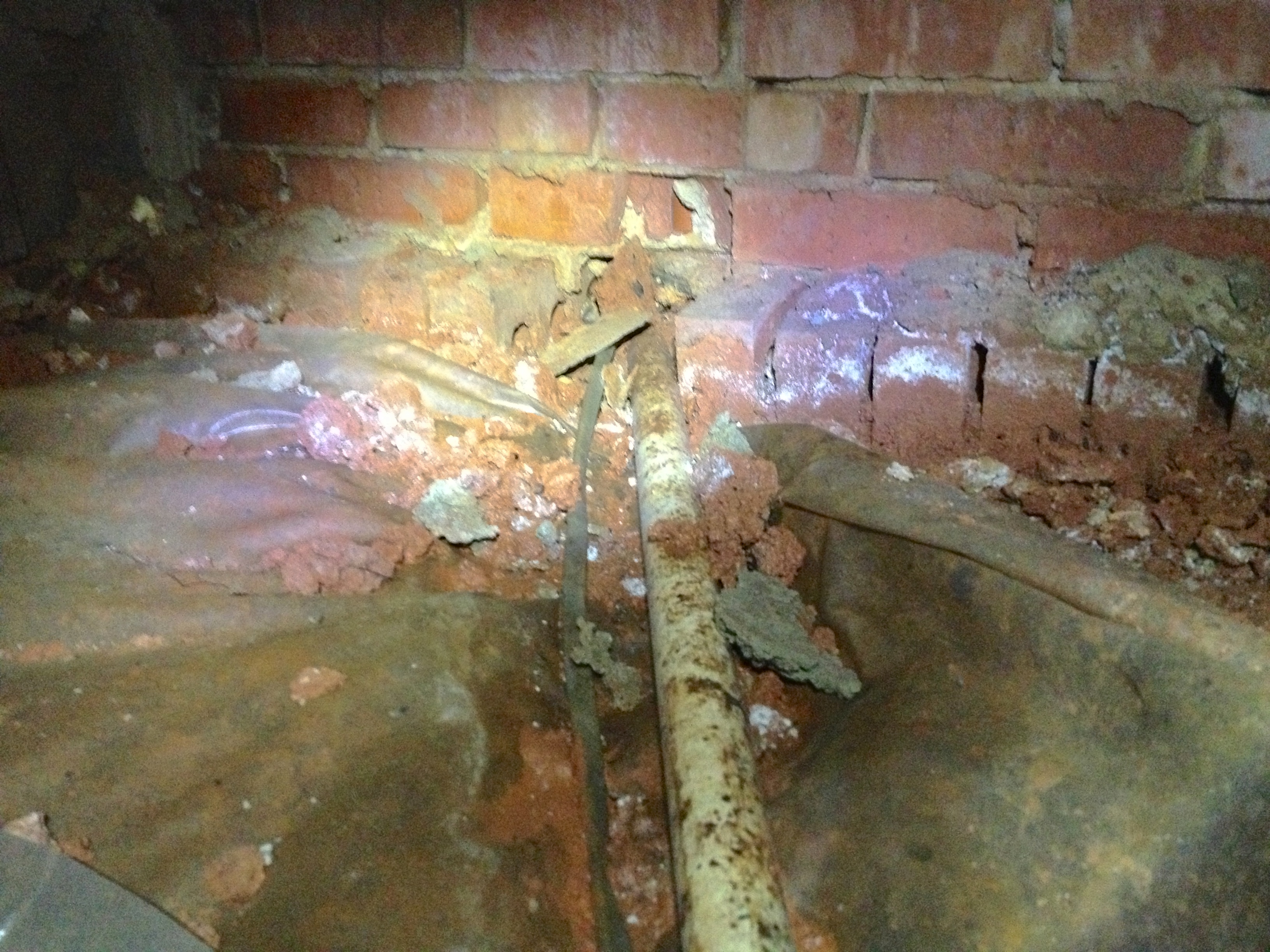
An open plumbing penetration is allowing water and debris to enter crawl space.
A few steps should be taken to prevent water from the outside of your home from having an easy opportunity to make it’s way into your crawl space. Extend your gutters (above or below ground) away from your foundation. Make sure that you have at least 5% grade falling away from your foundation so that water can easily flow away from your home. Seal below ground penetrations in your foundation wall that were created during the construction process. A thorough inspection by our Moisture Intrusion Technicians can reveal these penetrations.
2. Adequate vapor barrier
The floor of your crawl space should be 100% covered with a minimum 6 Mil plastic barrier. This barrier can be upgraded by installing a thicker plastic and/or taping the seams. A thicker plastic can add to efficiency and longevity of your vapor barrier.
3. Waterproof the outside of your home
You can prevent water from seeping through the foundation walls by waterproofing the exterior surface of your crawl space walls. This process should be performed by a professional as it involves excavating the earth beside the wall, cleaning the wall, applying a waterproof membrane, and possibly installing a drain beside the footer.
4. Install a french drain and sump pump
It is not always ideal to excavate and waterproof the exterior of the home. In this case the water can be controlled by installing an interior French drain that moves the water out of the crawl space. Depending on the terrain of your yard, a French drain may also need to be installed in conjunction with a sump pump. 
5. Install a dehumidifier
Image
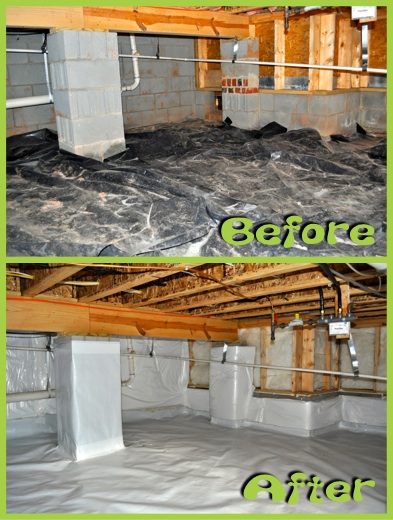
A sealed crawl space before and after.
A dehumidifier can keep the humidity level low and reduce the chances of mold, but keep in mind that you will also need to seal any possible openings that can allow humid air to enter. Otherwise you will be unsuccessfully attempting to dehumidify your neighborhood! A few common culprits are the crawl vents, lack of a tight seal on the crawl door, and small holes in the masonry wall around wires, cables, and plumbing lines.
6. Seal (encapsulate) the entire crawl space
The best case scenario for maintaining an ideal humidity level in your crawl space is to seal or encapsulate the crawl space. A crawl space that is sealed properly will not allow any outside humidity to enter the crawl, creating a clean and dry environment. A sealed crawl space improves your home’s indoor air quality, improves the efficiency of your HVAC system, as well as creates an ideal environment for storage.