Thursday, January 2, 2014

6 Ways to Keep your Crawl Space Dry

1. Keep outside water out
Image
An open plumbing penetration is allowing water and debris to enter crawl space.
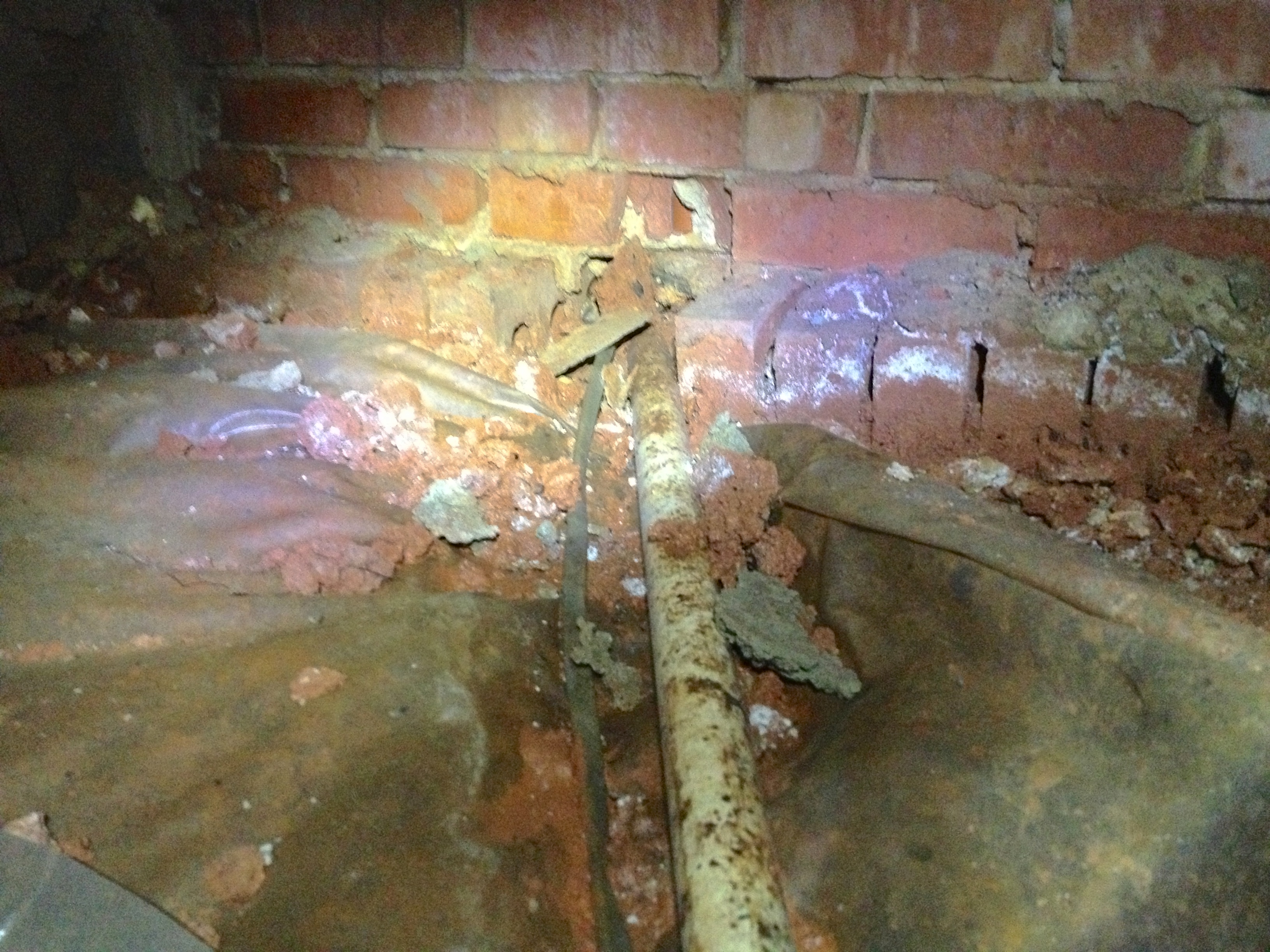
A few steps should be taken to prevent water from the outside of your home from having an easy opportunity to make it’s way into your crawl space. Extend your gutters (above or below ground) away from your foundation. Make sure that you have at least 5% grade falling away from your foundation so that water can easily flow away from your home. Seal below ground penetrations in your foundation wall that were created during the construction process. A thorough inspection by our Moisture Intrusion Technicians can reveal these penetrations.
2. Adequate vapor barrier
The floor of your crawl space should be 100% covered with a minimum 6 Mil plastic barrier. This barrier can be upgraded by installing a thicker plastic and/or taping the seams. A thicker plastic can add to efficiency and longevity of your vapor barrier.
3. Waterproof the outside of your home
You can prevent water from seeping through the foundation walls by waterproofing the exterior surface of your crawl space walls. This process should be performed by a professional as it involves excavating the earth beside the wall, cleaning the wall, applying a waterproof membrane, and possibly installing a drain beside the footer.
4. Install a french drain and sump pump
It is not always ideal to excavate and waterproof the exterior of the home. In this case the water can be controlled by installing an interior French drain that moves the water out of the crawl space. Depending on the terrain of your yard, a French drain may also need to be installed in conjunction with a sump pump. 
5. Install a dehumidifier
Image
A sealed crawl space before and after.
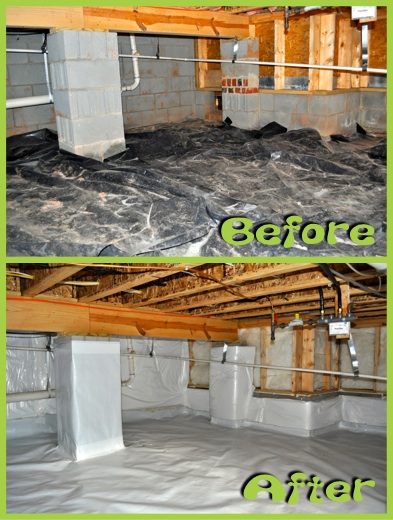
A dehumidifier can keep the humidity level low and reduce the chances of mold, but keep in mind that you will also need to seal any possible openings that can allow humid air to enter. Otherwise you will be unsuccessfully attempting to dehumidify your neighborhood! A few common culprits are the crawl vents, lack of a tight seal on the crawl door, and small holes in the masonry wall around wires, cables, and plumbing lines.
6. Seal (encapsulate) the entire crawl space
The best case scenario for maintaining an ideal humidity level in your crawl space is to seal or encapsulate the crawl space. A crawl space that is sealed properly will not allow any outside humidity to enter the crawl, creating a clean and dry environment. A sealed crawl space improves your home’s indoor air quality, improves the efficiency of your HVAC system, as well as creates an ideal environment for storage.

Tuesday, December 17, 2013

What is a French Drain and what does it have to do with France?

The phrase French Drain is heard quite often … on your favorite how-to TV show, in your local home improvement store, and in conversations in the yard with your neighbor. But I regularly hear the phrase “French Drain” used incorrectly. A French Drain is not to be confused with an underground gutter extension or a simple solid pipe used for relocating water from one location to another.

So, what is a French Drain?

French Drain install in progress
A French Drain can vary in size and materials used, but the essence of a French Drain contains these components: a trench, a perforated pipe (as opposed to a solid pipe), drainage rock, and a sediment filter. A french drain is commonly used to solve water related issues both on the interior and the exterior of a home, office, barn, shed, or other structure.

Interior applications

A French Drain is used primarily in two interior environments: basements and crawl spaces. These internal applications are methods of water control, not to be confused with waterproofing. Read this article to learn more about the differences between water control and water proofing.

Exterior applications

A French Drain is also used primarily in two external environments: yard drainage and foundation drains. A French Drain in your yard gives water an underground path to follow to get to where you want it to go, therefore controlling flooding, washout, erosion, or standing water problems. A French drain at the foundation of a structure will catch water near your building’s foundation and move it away without giving it an opportunity to enter your basement or crawlspace. A footer drain is usually installed along with adequate waterproofing of the foundation wall.

Was does a French Drain have to do with France?

Well, nothing really! The term French Drain was coined by an American named Henry French. French was an agriculturalist, inventor, lawyer, and author in Massachusetts in the 1800’s.

Do I need a French Drain?

If you have standing water or erosion under, in, or around your house, a French Drain could be a good solution for you. But a French Drain is not the answer to every water problem. Our Moisture Intrusion Specialists at Green Frog Waterproofing would be happy to inspect your property for free and give you a custom solution to resolving your water problem. Click here to request an inspection.

If you would like to learn more about French Drains, click here to view some informative articles on our website.

Wednesday, July 31, 2013

Waterproofing vs. Water Control

Let us begin by discussing what waterproofing is not. A waterproofing solution is very different from a 'water control' solution. Many approaches focus on simply controlling the flow of water. For example, a water control solution will continue to allow water into the crawl space or basement only to route the water back out again through a series of pipes and pumps. This approach is not always bad, but it is not waterproofing. This is a water control solution and is typically less desirable than a waterproofing solution. Waterproofing always involves keeping the water out of the crawl space and basement.

If a homeowner or business owners wants to waterproof a structure then it is necessary that a trained waterproofing professional dig, external to the structure, down to the footer and treat the external foundation walls with an impenetrable waterproofing product. In addition you will want to install a drain at the footer to route excess water away from the foundation. It is therefore highly preferred that the water never penetrate the building envelope to begin with. The homeowner should be aware that many companies sell water control solutions but label it as a waterproofing solution.

If as a homeowner you are interested in developing your home into a more healthy place to live and continue protecting your investment we recommend you consider one of the following:

1. Insure your crawl space has adequate waterproofing.
2. Insure a high quality thick plastic vapor barrier is covering your crawl space floor.
3. Consider investing in your home by installing a sealed crawl space.
4. If you have a sump pump or dehumidifier, check to insure they are working properly.

Visit us at www.GreenFrogWaterproofing.com ... Protecting your Pad